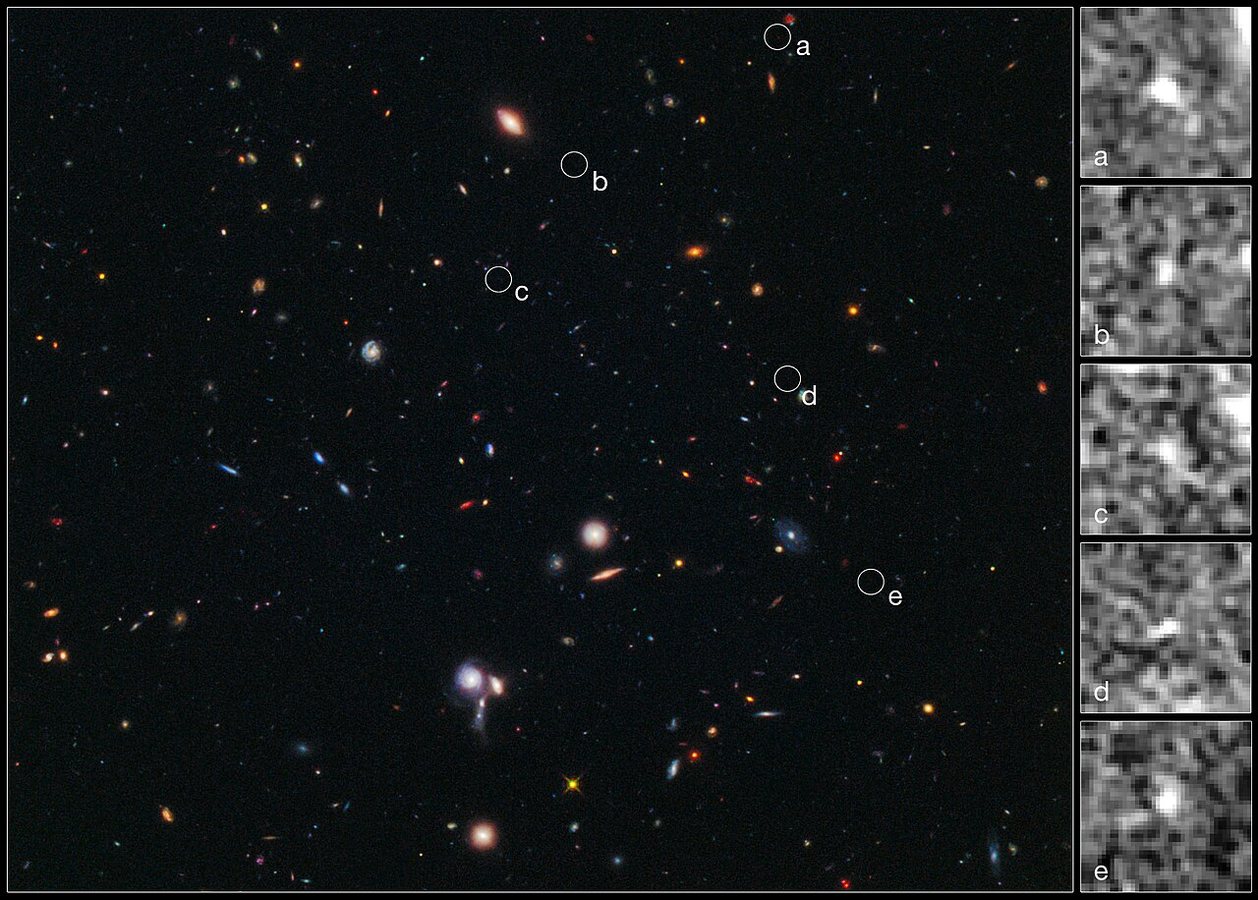
A University of California, Berkeley astrophysics undergraduate has identified three isolated dwarf galaxies that appear to have stopped forming stars, a condition that may mark them as some of the first resolved candidate «backsplash» galaxies ever found. The discovery, published in The Astrophysical Journal with Julian Shapiro as sole author, challenges the expectation that isolated dwarf galaxies should retain enough raw material to keep producing new stars.
The three systems, designated Shapiro Dg I, II and III, were spotted in archival data from the Hyper Suprime-Cam on the Subaru Telescope and the Canada-France-Hawaii Telescope. Dwarf galaxies are small galactic systems with relatively little stars, gas and dark matter compared with large galaxies like the Milky Way. The newly found objects are isolated, meaning they lie far from other galaxies, yet they are quiescent, having lost the ability to form new stars.
That combination is unusual. Isolated dwarfs generally preserve a sufficient supply of gas to sustain star formation, whereas dwarfs in dense environments or near massive galaxies tend to exhaust their star-forming activity because gravitational and hydrodynamic interactions strip away the cold gas they need. «In the case of isolated galaxies, star formation is expected to still be active, since there are no larger galaxies nearby that could deprive them of the gas needed to form new stars,» Shapiro said. «The galaxies I discovered, however, are an exception.»
Shapiro proposes that the three dwarfs may be backsplash galaxies, objects that in the past passed close to a large galaxy, lost their gas under the pressure exerted by that encounter, and were then expelled toward more remote regions of space. In his paper, he suggests the three could be among the first candidate backsplash galaxies to be identified and resolved. Specifically, they may once have fallen under the gravitational influence of Messier 101, also known as the Pinwheel Galaxy, before being pushed outward.
One of the three, Shapiro Dg II, has an alternative explanation. Its position is close enough to the spiral galaxy NGC 5585 that it could instead be a faint satellite galaxy rather than a backsplash object, Shapiro said. A separate research group independently identified Dg-1 as part of the ID-MAGE project.
To determine where backsplash dwarfs might be found near a Milky Way-like galaxy and under what conditions they could be detected in telescope archives, Shapiro relied on sophisticated hydrodynamic simulations. A substantial part of the work was devoted to estimating distances, which was essential to establish whether the three galaxies were truly isolated.
«Building the basic knowledge needed to identify these galaxies, developing the code for modeling and analysis, and comparing the results with our cosmological model was a challenge,» Shapiro said. «I was fortunate because many of the leading journals in the field are freely accessible, which allowed me to acquire the necessary knowledge and skills.»
The standard cosmological model, the leading theory describing the structure of the universe, predicts that backsplash galaxies should be fairly common, yet examples in the local universe have been difficult to find. The three dwarfs could offer new clues supporting the model by showing that the processes it predicts can operate even in less dense and less extreme cosmic environments. The study also strengthens the hypothesis that some isolated galaxies lost their star-forming capacity after external forces acted on them, probably during an earlier passage near more massive galaxies.
Shapiro conducted much of the research while still in high school. He hopes future observations with high-resolution space telescopes will pin down the positions of the three galaxies and rule out alternative explanations for their quiescent state. The Vera C. Rubin Observatory could also contribute by finding many other potential backsplash galaxies.
For now, the objects remain candidates. Further observations will be needed to determine their distances and nature with greater precision.