The most important fact about American nuclear preparedness is easy to miss: the United States is much better prepared to deter a nuclear attack than to absorb one.
Those are different missions. Deterrence depends on military forces, warning systems, command-and-control and the ability to retaliate. Civil defense depends on hospitals, fire departments, communications, buildings, roads, public instructions, medical supplies and the ability of unaffected regions to help the places that have been hit.
Russia remains capable of threatening the first mission. Its nuclear force still includes land-based intercontinental ballistic missiles, ballistic-missile submarines and strategic bombers. The Federation of American Scientists estimated in 2025 that about 1,718 Russian strategic warheads were deployed, with additional strategic and nonstrategic weapons in storage. SIPRI reported in June 2026 that Russia and the United States together still possess the overwhelming majority of the world's stockpiled nuclear warheads.
The familiar image of a single missile aimed at a single downtown is too simple. There is no reliable public list showing what Russia would target in a war with the United States. Strategic targeting could focus on nuclear forces and command systems, on military and industrial infrastructure, on political leadership, or — in the worst countervalue scenario — on population centers. A war could move between those categories as escalation unfolds.
For civilians, the distinction may matter less than geography. New York, Los Angeles, Chicago, Houston and the Washington metropolitan area illustrate why large American cities are difficult to protect: dense populations, complex transport networks, tall buildings, hospitals, utilities and major economic functions are concentrated in the same urban footprint. A detonation in or near such a region would create a compound emergency rather than one isolated blast zone.
Federal response models make clear that nuclear effects are not a fixed radius. Yield, altitude, terrain, building type and weather all change the outcome. In one standard federal planning example — a 10-kiloton near-surface detonation — severe physical destruction extends roughly half a mile from ground zero, substantial structural damage reaches about a mile, and lighter blast damage extends several miles. Fallout can stretch much farther downwind.
That is an emergency-planning case, not a prediction of what a Russian strategic weapon would look like over an American city. Larger weapons can produce much wider thermal and blast effects, while an airburst and a ground burst create different fallout patterns. Any casualty estimate that pretends to be exact without specifying those variables is misleading.
What can be said with confidence is that the central zone of a major detonation would see collapsed or unsound buildings, blocked streets, broken water and gas lines, fires and intense radiation hazards. Farther out, large numbers of people could be injured by flying glass, debris and burns. Downwind communities could face dangerous fallout even if their buildings were not destroyed by the blast.
The American health-care system is not sized for this. HHS guidance explicitly anticipates that in a nuclear mass-casualty event, medical personnel, hospitals, vehicles, communications and supplies may all be reduced at the same moment demand surges. Hospitals may have to adopt crisis standards of care. Some people who could survive with rapid trauma treatment in normal conditions might not receive it quickly enough.
That is not evidence that the United States has done nothing. It has done a great deal.
The Strategic National Stockpile contains medicines and supplies intended for chemical, biological, radiological and nuclear emergencies. Federal guidance says those assets can be moved quickly after a deployment decision. FEMA and HHS maintain detailed response frameworks. CDC tells the public to get inside, stay inside and stay tuned, because shielding from a substantial building can dramatically reduce fallout exposure.
The problem is that federal capability still has to connect to local reality.
GAO reported in February 2026 that two major HHS preparedness programs had distributed about $900 million in fiscal 2024 to public-health departments and health-care systems, yet coordination between them remained incomplete. The watchdog specifically identified missed opportunities for joint training and exercises. Other GAO reports have documented public-health workforce shortages and warned that limited federal response staffing becomes a serious problem when multiple disasters happen at the same time.
A nuclear attack would be the ultimate concurrent disaster. Firefighters would be casualties. Hospital staff might be unable to reach work. Cell networks could fail from damage, overload or loss of power. Roads would be blocked. Ambulances could be trapped. Water pressure for firefighting could collapse. Families might leave protective buildings at exactly the wrong time because they do not know where fallout is moving.
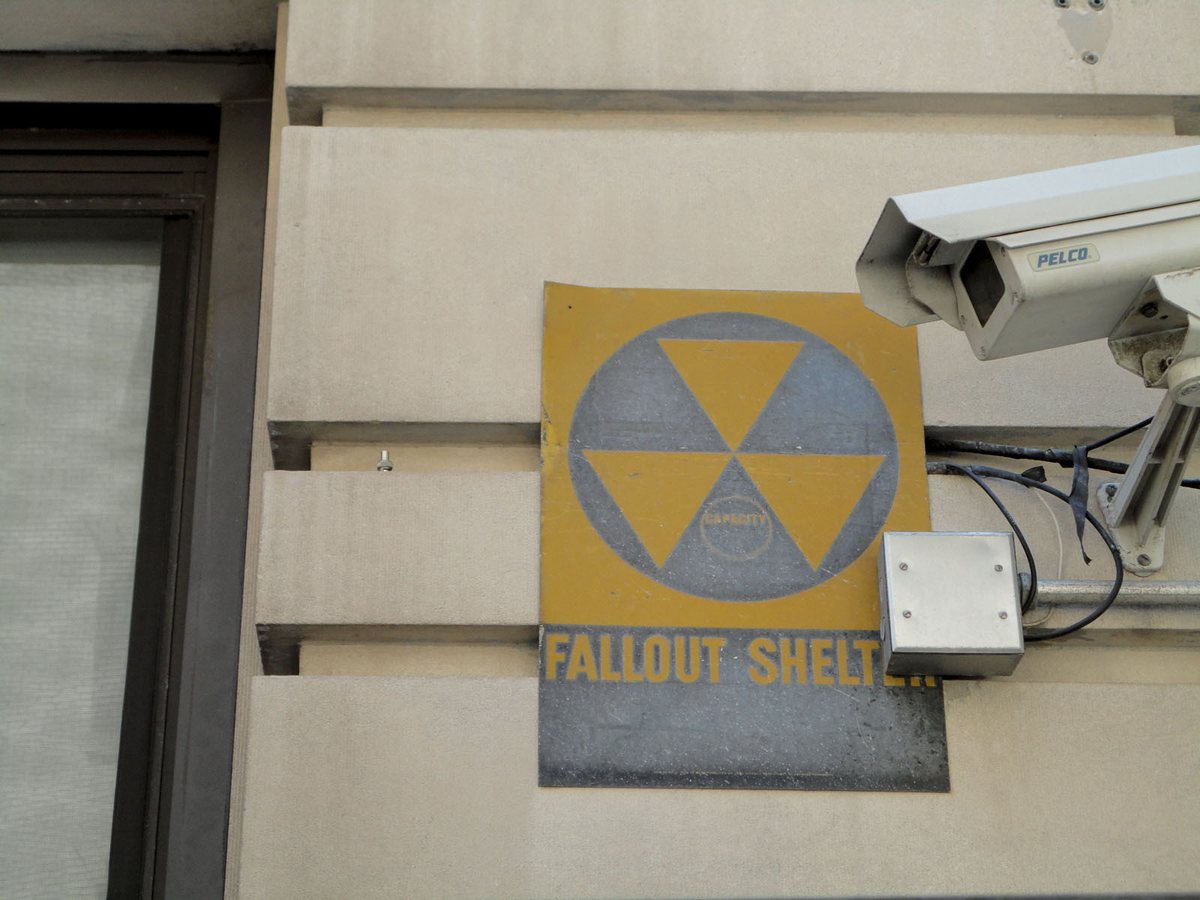
The shelter issue is especially revealing. The old Cold War image of Americans moving toward marked fallout shelters no longer describes a national system. Historical federal records show the United States never built a massive federally financed network of hardened shelters. Many designated spaces were simply basements or lower floors in existing buildings. Today's public guidance is built around the best available structure nearby.
That approach is rational because the first minutes after fallout begins are not the time for a cross-city evacuation. CDC advises people to get inside a substantial building, move toward the basement or interior and wait for official instructions. Leaving immediately can increase exposure if a person walks or drives into the fallout path.
But the same advice highlights an inequity in preparedness. Someone in a reinforced concrete office tower with a deep interior may have much better protection than someone in a lightweight single-story home. A person who receives a clear alert may make a lifesaving decision that another person, separated by a communications outage, never hears.
The result is a civil-defense model that can reduce casualties but cannot guarantee protection. It assumes many buildings remain usable, enough officials can communicate, enough hospitals survive outside the worst zones, and unaffected regions can send help.
A single detonation would strain those assumptions. A coordinated multi-city strike could break them.
That is the sense in which the United States is not “ready.” It is not defenseless, and it is not without plans. It is a highly capable country whose civilian emergency system is optimized for disasters that, however severe, still leave large parts of the nation intact and available to help. Strategic nuclear war is different because it can attack the donor regions and the disaster zones at the same time.
The biggest preparedness gains are therefore not exotic. They are resilient warning systems that work when power and cell networks fail, hospitals that can rapidly expand trauma and burn capacity, radiation-trained first responders, better mapping of protective buildings, stockpiles that states can actually distribute under disrupted conditions, and repeated exercises that force agencies to practice together.
No program can make a large nuclear attack normal. The goal of civil defense is narrower and more urgent: preserve enough functioning systems, information and shelter so that millions of decisions made in the first hours tilt toward survival rather than chaos.