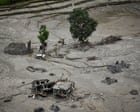
Rescuers in Nepal have built temporary bridges and dug through the ruins of Himalayan hydropower projects to reach hundreds of trapped workers, as the death toll from devastating floods passed 1,000 nearly a week after the disaster struck towns and valleys across the country.
Police have asked relatives of missing tourists to provide blood samples and photographs to help identify victims through DNA testing, as the scale of the destruction continues to unfold. About 600 people remain stuck in several devastated hydropower stations that have become the focus of the rescue operation.
Prime Minister Balendra Shah said more than 11,000 people had been rescued across the affected region, and that power and communication lines had been restored in some areas. The floods, which also affected the Tibet region of China, have left a trail of destruction that officials say will take months to fully assess.
The disaster struck nearly a week ago when flash floods swept through mountain valleys, overwhelming villages and infrastructure. Hydropower projects, which are built along fast-flowing rivers in steep terrain, were particularly hard hit, with workers trapped inside tunnels and facilities as water and debris rushed through.
Rescue teams have been working around the clock, using temporary bridges to reach remote communities that were cut off when roads and existing bridges were washed away. In some cases, rescuers have had to dig through collapsed structures by hand to reach survivors, according to officials involved in the operation.
The request for DNA samples marks a grim phase of the response, as authorities shift from rescue toward recovery and identification. Relatives of missing tourists have been asked to come forward with blood samples and recent photographs, which will be used to match against bodies recovered from the flood zone.
Experts say the difficulty of reaching the missing workers is compounded by the remote location of the hydropower tunnels, many of which are embedded deep inside mountains and accessible only by narrow, treacherous paths. The tunnels themselves pose additional risks, with unstable debris and the constant threat of further flooding.
The floods have raised questions about the placement of critical infrastructure in disaster-prone Himalayan valleys, where climate change is increasing the frequency and intensity of extreme weather events. Glacial lake outbursts and sudden cloudbursts have become more common in the region, scientists say, putting both workers and residents at greater risk.
Officials have not yet provided a full accounting of the damage, but early assessments indicate that homes, roads, bridges, and agricultural land across several districts have been destroyed. The government has said it will prioritize restoring access to cut-off communities and providing shelter and aid to those who lost everything.
As the rescue effort continues, the focus remains on the hundreds of workers still trapped in the hydropower stations. Prime Minister Shah said the government is doing everything possible to reach them, but acknowledged that the terrain and conditions are making the operation extremely challenging.