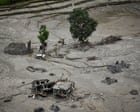
The death toll from catastrophic flash floods in Nepal and Tibet has surpassed 1,000, nearly a week after the disaster struck Himalayan towns and valleys. Nepali authorities have begun asking relatives of missing tourists to provide blood samples and photographs to help identify victims, as rescue teams continue searching for hundreds of workers still trapped in damaged hydropower projects.
Nepali rescuers have built temporary bridges to reach remote areas and are digging through the ruins of hydropower stations in the Himalayas to free trapped workers. Approximately 600 people remain stuck in several devastated hydropower facilities that have become the central focus of the rescue operation, according to officials familiar with the ongoing efforts.
Prime Minister Balendra Shah said more than 11,000 people have been rescued across the affected region. Power and communication lines have been restored in some areas, offering a measure of relief to communities cut off since the floods began. The government has not released a full accounting of the dead and missing, but police have confirmed that the identification process for recovered bodies is underway, with DNA testing expected to play a critical role.
The floods, triggered by intense rainfall in the high Himalayas, swept through towns and valleys on both sides of the Nepal-Tibet border, destroying homes, infrastructure, and livelihoods. The disaster has exposed the vulnerability of hydropower development in the region, where projects are often built in steep, geologically unstable terrain prone to sudden flooding and landslides.
Rescue operations have been hampered by damaged roads, broken bridges, and the sheer scale of destruction. Teams have had to improvise crossings over raging rivers and navigate debris fields to reach isolated communities. Helicopters have been deployed to airlift the most critically injured and to deliver supplies to areas still inaccessible by land.
Officials have said that identifying the dead is a priority, particularly for foreign tourists who were in the region when the floods struck. Police have appealed to families of missing persons to come forward with DNA samples and recent photographs to speed up the process. The request underscores the scale of the human toll and the difficulty of confirming identities when bodies have been recovered from mud, rubble, and water.
The disaster has raised questions about preparedness and early warning systems in mountainous regions increasingly affected by extreme weather. Experts have noted that flash floods in high-altitude areas can be particularly deadly because they arrive with little notice and carry enormous destructive force. The full extent of the damage is still being assessed, and the final death toll is expected to rise as rescuers reach more remote valleys and clear debris from the worst-affected hydropower sites.
For now, the immediate focus remains on the hundreds of workers still believed to be alive inside tunnels and structures of the damaged power plants. Rescue teams are working around the clock, using heavy equipment and manual labor to carve paths through collapsed concrete and rock. The operation is a race against time, with officials acknowledging that conditions inside the tunnels are precarious and that the window for finding survivors may be narrowing.