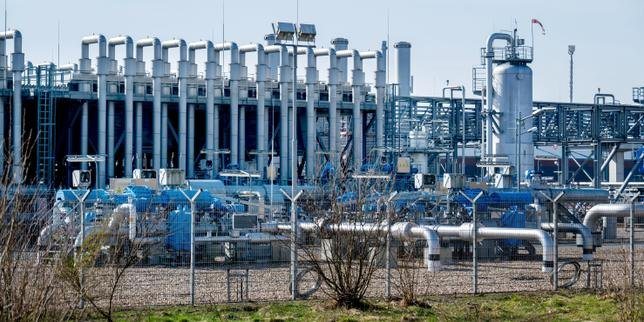
European natural gas storage facilities are entering the colder months with inventories at their lowest seasonal level in years, prompting warnings that the region could face a difficult winter without an adequate safety buffer. The situation has pushed wholesale prices higher and revived concerns about energy security across the continent.
According to industry data, storage sites in Europe are significantly less full than is typical for early September, a period when operators normally use the warmer months to build reserves ahead of peak heating demand. The shortfall has been attributed to a combination of factors, including a colder-than-expected end to the previous winter, which drew down stocks, and a slower-than-usual refill season during the summer.
One analyst quoted in a French newspaper warned that the region risks going through the cold season without a real safety net. The warning reflects growing unease among traders and policymakers that the margin for error is now thin. If a prolonged cold snap coincides with supply disruptions, the region could see a sharp drawdown of remaining reserves within a matter of weeks.
The low storage levels have already had a visible effect on markets. European benchmark gas prices have climbed to their highest point in three years, a move that analysts link directly to the storage deficit. The price spike is feeding through to the wider economy, with energy-intensive industries and households facing the prospect of higher bills in the coming months.
In the United Kingdom, the situation is particularly acute. The country has significantly less gas storage capacity relative to its consumption than many of its European neighbours, a legacy of decades of underinvestment and policy decisions to rely on imports and North Sea production. Industry observers have noted that UK storage could theoretically be exhausted in about two weeks if the country were to face a severe winter crunch with no incoming supplies.
This structural weakness has been a recurring point of concern for British energy security. Unlike some continental European countries that maintain strategic reserves capable of covering several months of demand, the UK's largest storage facility can cover only a fraction of national consumption for a limited period. The gap is normally bridged by pipeline imports from Norway and liquefied natural gas shipments from global markets, but both sources are subject to price volatility and competition from other buyers.
The current situation is a reminder of how the European energy landscape has shifted since the crisis of 2022, when Russia cut most pipeline supplies to the continent. While Europe has successfully diversified its sources of supply, the margin of safety has narrowed. The region now depends more heavily on global LNG markets, where prices are set by international competition rather than regional fundamentals.
For British households, the immediate concern is the impact on energy bills. Wholesale gas prices are a key driver of the price cap that limits what suppliers can charge domestic customers. A sustained period of high wholesale prices would inevitably feed through to consumer tariffs, adding fresh pressure to household budgets already stretched by the cost of living.
Policymakers are watching the situation closely. There have been calls for the government to review its approach to strategic gas storage and to consider measures that would encourage investment in new capacity. However, such projects are costly and take years to develop, meaning they offer little relief for the coming winter.
For now, the focus is on the weather. A mild autumn and early winter would give storage operators more time to buy gas and rebuild inventories, easing the pressure on prices. A cold start to the season, by contrast, would accelerate the drawdown and could force the region to compete aggressively for LNG cargoes, pushing prices even higher.
The coming weeks will be critical in determining whether Europe can navigate the season without major disruption. The current trajectory, with low storage and firm prices, suggests that the risk of a difficult winter is real, even if the most severe scenarios remain unlikely at this stage.