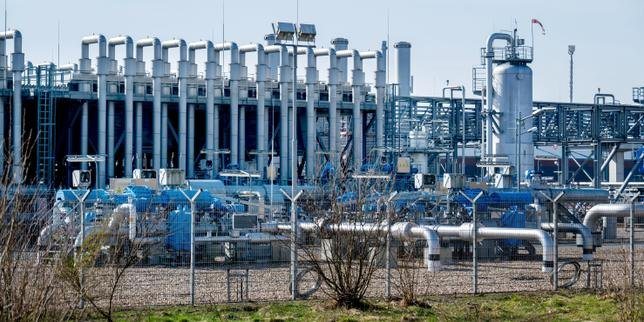
European gas reserves are entering the winter season at their lowest level in years, prompting warnings that the continent could face the cold months without a reliable safety buffer. Storage facilities across the region have been drawn down faster than usual, leaving operators and governments with limited room to respond if demand surges or supply disruptions occur.
The situation has already pushed natural gas prices to their highest point in three years, with analysts pointing to the combination of low storage levels, reduced pipeline flows and competition for liquefied natural gas cargoes on the global market. Households in several countries have been warned that the price spike could pile fresh pressure on energy bills, adding to the cost-of-living strain that has persisted since the energy crisis began.
Germany, which relies heavily on gas for both heating and industrial production, has been at the centre of the concern. Storage sites such as the Etzel facility in Lower Saxony have been operating under strain as operators try to balance the need to refill reserves against the high cost of purchasing gas on the open market. The country's regulatory framework requires storage levels to meet certain thresholds ahead of winter, but meeting those targets has become increasingly expensive.
The broader European picture is no more reassuring. The European Union set ambitious targets for storage filling after the energy shock of 2022, when Russia sharply reduced pipeline deliveries to the bloc. Those targets were met in the past two years, but this year's trajectory has been weaker. A combination of a colder-than-expected spring, higher industrial demand and delays in securing sufficient LNG supplies has left the continent entering the heating season with a thinner cushion than planned.
Britain faces a particularly acute challenge. The country has significantly less gas storage capacity than many of its European neighbours, a legacy of policy decisions taken over the past decade that reduced investment in new facilities. Industry analysts have warned that in a severe winter scenario, UK storage could be exhausted within two weeks, leaving the country dependent on daily imports via pipeline and LNG terminals. That dependence exposes British consumers to volatile international prices, which have already risen sharply in recent weeks.
The price surge has been driven by several factors converging at once. European buyers are competing with Asian importers for LNG cargoes, particularly as Japan and South Korea rebuild their own inventories. At the same time, Norway, now the largest supplier of pipeline gas to Europe, has faced maintenance issues at some of its offshore fields, temporarily reducing output. Any further disruption, whether from unplanned outages or geopolitical tension, would tighten the market further.
Governments across Europe are watching the situation closely. The European Commission has said it is monitoring storage levels and stands ready to coordinate a response if needed, but its options are limited. Emergency measures such as mandatory consumption reductions remain politically sensitive, and the legal framework for such steps has not been tested since the height of the 2022 crisis.
For consumers, the immediate outlook is unwelcome. Energy suppliers in several countries have already signalled that tariffs will rise in the coming months as they pass on higher wholesale costs. In the UK, the energy price cap is expected to increase when it is next adjusted, adding to the financial pressure on households that have only recently seen bills begin to ease from their crisis peaks.
The longer-term question is whether Europe's approach to gas security is adequate. The continent has made significant progress in diversifying supply away from Russia, but storage remains the key buffer against short-term shocks. With reserves low and prices high, the coming months will test whether the system built after 2022 is resilient enough to withstand a genuinely cold winter.