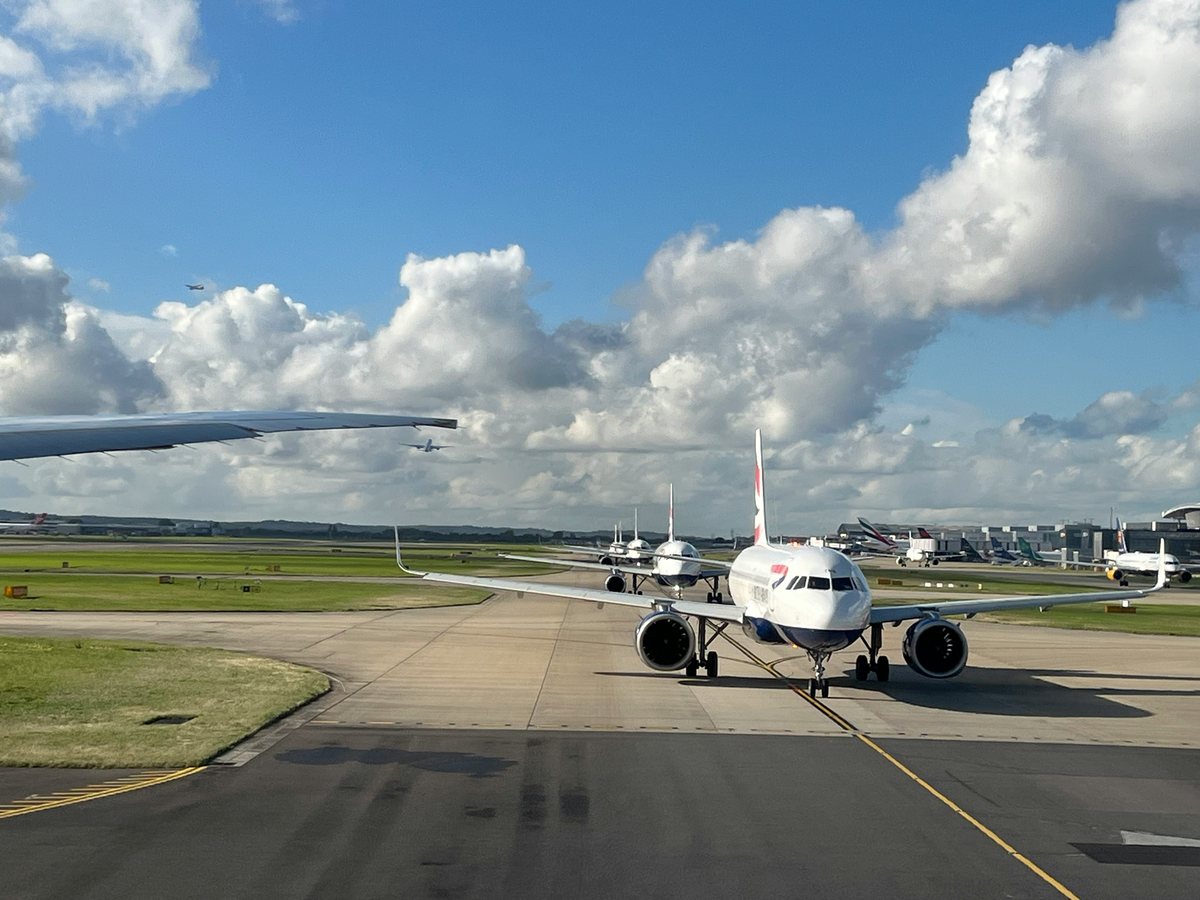
Britain’s air-traffic system suffered one of its most disruptive days in years on Tuesday after a technical failure at NATS forced airlines to cancel flights across the country and left a large backlog stretching into the evening.
The scale became clearer as the day progressed. Early figures showed at least 625 cancellations, but by late evening Euronews, citing Flightradar24, reported that more than 1,000 flights had been cancelled. Heathrow, Gatwick, Manchester and Birmingham were among the airports hit, alongside Stansted and London City. British Airways, easyJet, KLM and Lufthansa were among carriers forced to cut services.
NATS said the problem affected its flight-processing system. It later said the system issue had been resolved and that operations were running normally again while controllers and airlines worked through the accumulated backlog. A technical fix, however, does not instantly restore an aviation network built around tightly sequenced aircraft, crews, airport slots and connecting passengers.
For airlines, the cost is likely to extend well beyond the flights that disappeared from departure boards. Aircraft and crews can end up in the wrong cities, duty-time limits can prevent staff from operating later sectors, and passengers who miss connections need to be rebooked. Hotels, ground transport and compensation obligations can add to the bill. The practical challenge is therefore less about restarting the system than rebuilding a timetable after much of a day has been disrupted.
The incident also had a European dimension. UK airports are major nodes for short-haul traffic and long-haul connections, so disruption quickly spread to routes involving continental hubs. German and Swiss airports reported knock-on effects, while carriers with aircraft rotating through London had to alter later services elsewhere in their networks.
For business travellers, the failure is a reminder that transport infrastructure risk is not confined to strikes or bad weather. A digital or technical fault in one critical system can affect thousands of movements because modern aviation is designed to use capacity efficiently rather than maintain large amounts of spare room.
The immediate question for NATS will be what failed and why. The operator has said the technical issue is resolved, but a full explanation of the cause is still needed. Airlines and airports will also want to know whether safeguards worked as intended and what can be changed to prevent another nationwide shock.
Passengers due to fly on Wednesday should not assume that a normal air-traffic-control system means a normal schedule. Airlines still have to position aircraft and crews, and late inbound flights can continue to distort morning departures. Travellers should check directly with their carrier before leaving for the airport and should keep receipts for reasonable expenses if a cancellation forces an unexpected overnight stay.
The larger issue is institutional. Britain relies on NATS as a piece of national economic infrastructure, not simply as a service to airlines. When that infrastructure stalls, the effects move rapidly through tourism, business travel, cargo schedules and the European aviation network. The fault may have lasted hours; clearing its consequences will take longer.