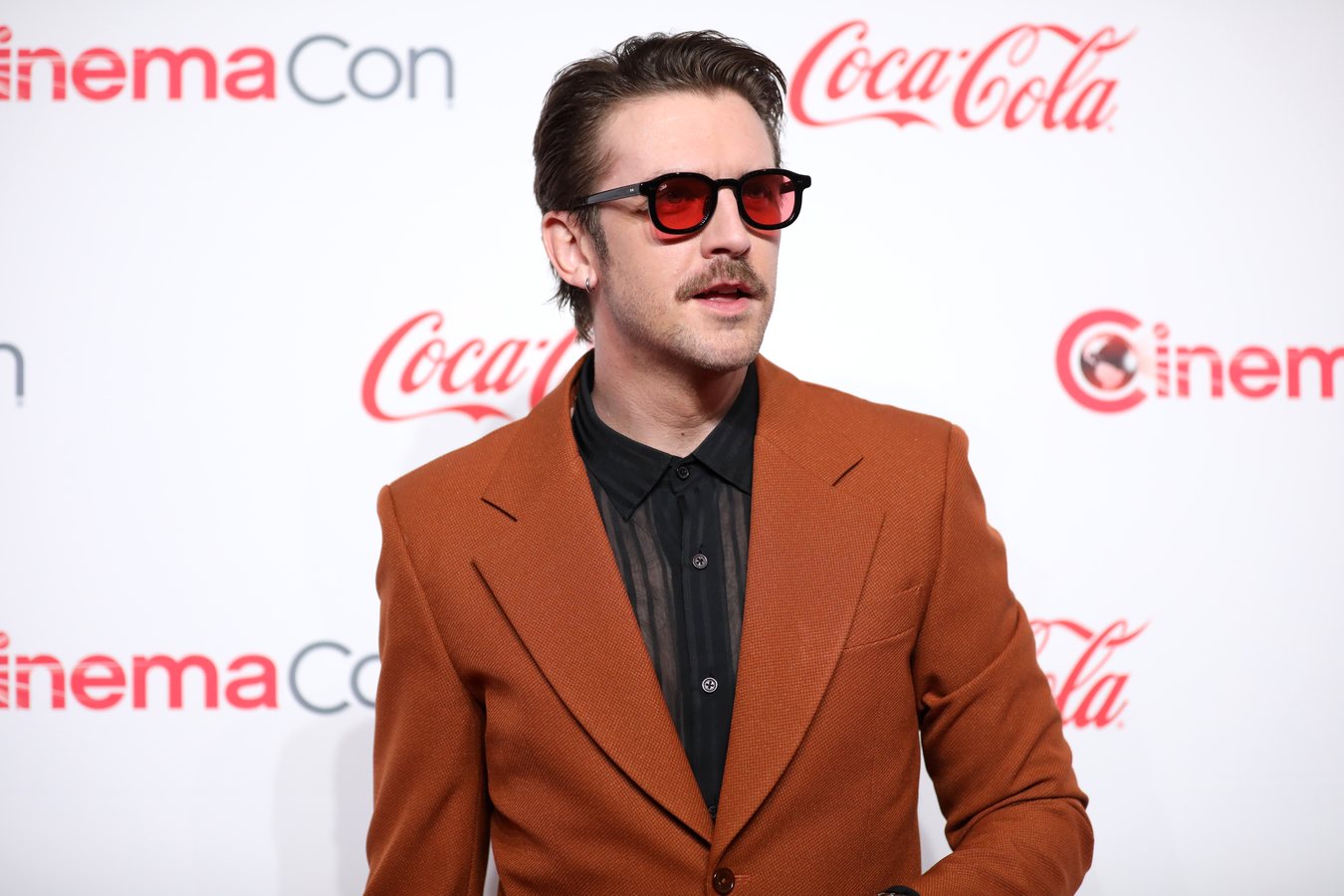
Dan Stevens will play Alex Murphy and RoboCop in Prime Video’s upcoming eight-episode series, giving Amazon’s latest MGM franchise revival a leading actor and bringing a 1987 science-fiction icon back to television at a moment when its central anxieties feel unusually current.
The official premise says a giant technology conglomerate convinces a city to place a powerful robot on its police force. The machine is implanted with the consciousness of a beloved officer who has died. Stevens will play that officer, Alex Murphy, preserving the essential conflict that has defined RoboCop from the beginning: a public servant is transformed into a corporate-owned system, but the person inside the technology does not vanish as neatly as the company might prefer.
Stevens brings a varied television résumé to the part. He became widely known as Matthew Crawley on Downton Abbey and later starred in FX’s Legion, where he played a character whose identity, memory and perception were continuously destabilized. His film work includes Disney’s live-action Beauty and the Beast and Godzilla x Kong: The New Empire. He is also expected to appear in the second season of Dexter: Resurrection. That range matters for Murphy, a role that has to work simultaneously as action spectacle and personal tragedy.
Peter Ocko is writing the new series and will serve as showrunner and executive producer. James Wan, Michael Clear and Rob Hackett are executive producers through Blumhouse Atomic Monster. Michael Miner and Ed Neumeier, who co-created and co-wrote the original RoboCop, are also executive producers. Amazon MGM Studios is producing the project. Wan’s role is as an executive producer; he has not been announced as the series director.
Paul Verhoeven’s original RoboCop, released in 1987 and starring Peter Weller, became a landmark partly because it did not treat its futuristic setting as decoration. Its crime-ridden Detroit was shaped by privatization, corporate ambition, aggressive media and the idea that public safety could be turned into a commercial product. The movie’s violence was deliberately excessive, but its satire gave the action a target.
The franchise continued through two movie sequels, multiple television adaptations, animation, comic books and video games. Weller returned for the second film, Robert Burke took over the role in the third, and Joel Kinnaman led a 2014 movie reboot. Those projects varied widely, but the image of RoboCop endured because the basic concept remains easy to understand: a machine is built for control, while the human consciousness inside it keeps reasserting itself.
That idea now lands in a different technological climate. Artificial intelligence systems are becoming more capable, private companies increasingly provide infrastructure used by governments, and debates over surveillance and automation are no longer confined to science fiction. Wan has said the original film’s questions about technology, identity and whom corporations serve have grown more urgent. Amazon MGM has similarly emphasized the franchise’s themes of humanity versus technology and unchecked corporate power.
An eight-episode format could give the new adaptation space to explore those issues beyond the origin story. It can spend more time with Murphy’s memories, the people who knew him as a man and the institutional decisions that reduce him to a platform. It can also examine the city that accepts the corporation’s proposal and the incentives that make a robotic police solution attractive in the first place.
Prime Video has not yet announced a premiere date. For now, Stevens’ casting is the biggest concrete step in the revival. The success of the series will depend less on reproducing the famous armor than on recovering what made it unsettling: RoboCop is most effective when the audience can see the machine clearly and still feel the person trapped inside it.