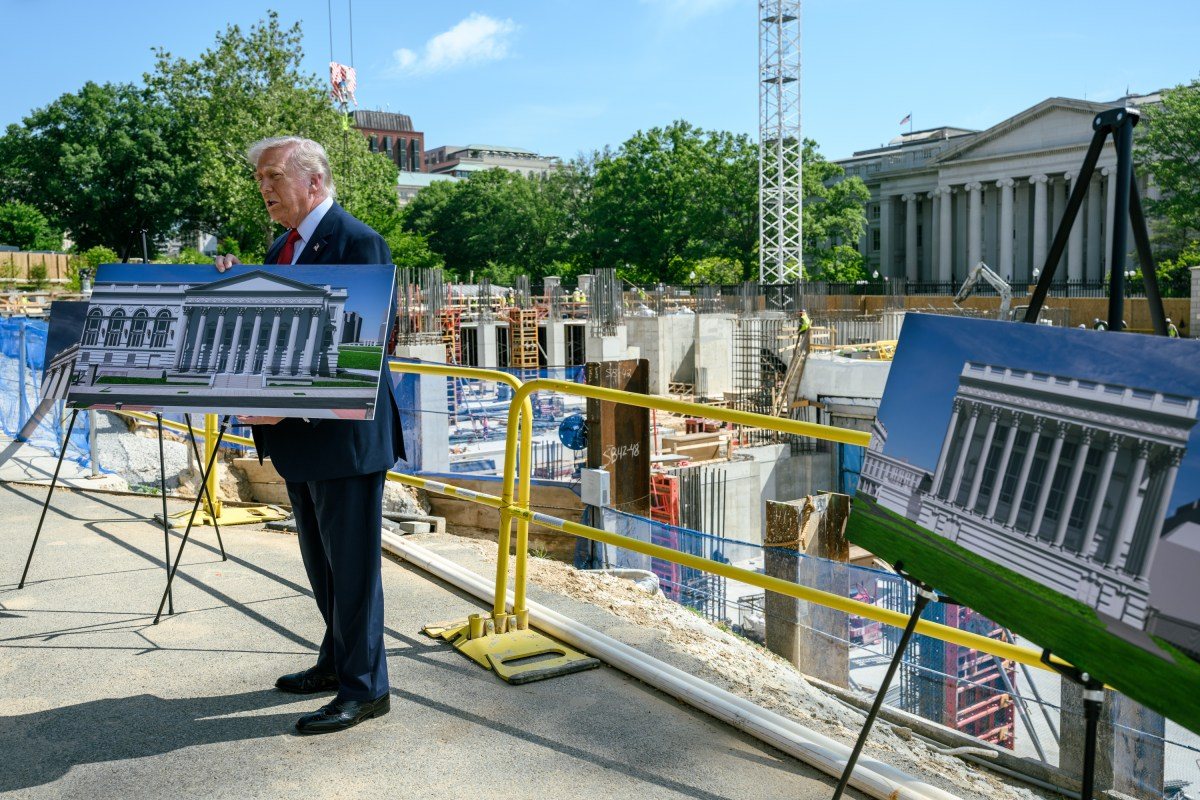
A £300m-plus equivalent construction project would normally invite questions about budget, procurement and return. President Donald Trump’s White House ballroom raises a harder one: can private money finance a major transformation of public property without a project-specific act of Congress?
The US Supreme Court on 31 August allowed construction of the roughly $400m complex to continue while the administration pursues an appeal. The decision is a practical victory for the White House, but it does not settle whether the project was lawfully authorised. The majority instead concentrated on whether the National Trust for Historic Preservation has standing to sue.
That procedural route is important for institutions and investors because it separates two different kinds of risk. The first is the legal merits of a project. The second is whether anyone challenging it can get a court to reach those merits. Here, the administration won immediate relief largely on the second question.
The dispute emerged after the White House’s East Wing was demolished in October 2025. The National Trust sued in December, arguing that the administration needed congressional authority and federal review before undertaking a reconstruction of this magnitude. A district court imposed an injunction, later modified to permit safety and security work. The US Court of Appeals for the District of Columbia Circuit kept that order in place in August 2026, finding that the Trust was likely to succeed on significant parts of its case.
The Supreme Court majority then concluded that the Trust was unlikely to show the concrete personal injury required by Article III. Its case relied in part on a Washington resident who said the enlarged building would damage her experience of the historic White House setting. The justices in the majority treated objections to scale, height and massing as insufficiently individualised.
Chief Justice John Roberts objected. Joined by three liberal justices, he argued that the government’s ordinary authority to maintain the presidential residence did not obviously extend to demolishing the East Wing and constructing a privately financed complex worth hundreds of millions of dollars. His dissent underscored the unresolved governance problem: private finance can change who pays, but not necessarily who has legal authority to approve the asset.
The cost history illustrates why the distinction matters. The White House announced the ballroom in July 2025 at about $200m, describing a 90,000-square-foot venue seating roughly 650 guests. The administration’s current website lists $250m. Court proceedings and current reporting now put the project at around $400m. The White House says Trump and private donors are funding it.
For public-sector governance, that funding mechanism is unusual. A donor can supply capital without creating a direct taxpayer construction bill, but the building remains part of a federal complex. Questions about planning authority, heritage, security, maintenance and future operating costs do not become private simply because the cheque originates outside the Treasury.
The administration, for its part, argues that the ballroom is not merely a hospitality asset. Supreme Court filings describe an integrated military complex and secure event space. Senior security officials told the Court that delay would affect presidential protection, intelligence safeguards and high-level diplomacy. That claim turns a ceremonial expansion into infrastructure the government says is operationally urgent.
The project team named by the White House includes McCrery Architects, Clark Construction and AECOM, linking a politically charged case to major private-sector delivery capabilities. For those firms, the legal environment matters because injunctions and emergency stays can alter sequencing, costs and exposure even when financing is available.
The Supreme Court’s stay remains while the administration seeks full review. If the justices decline the case, the stay ends. If they accept it, construction can continue until final judgment.
The broader lesson is not that private funding makes public investment easy. It is almost the opposite. When private capital meets a public asset, the source of money can be the simplest part of the transaction. Authority, accountability and the durability of permission can be much harder to price.