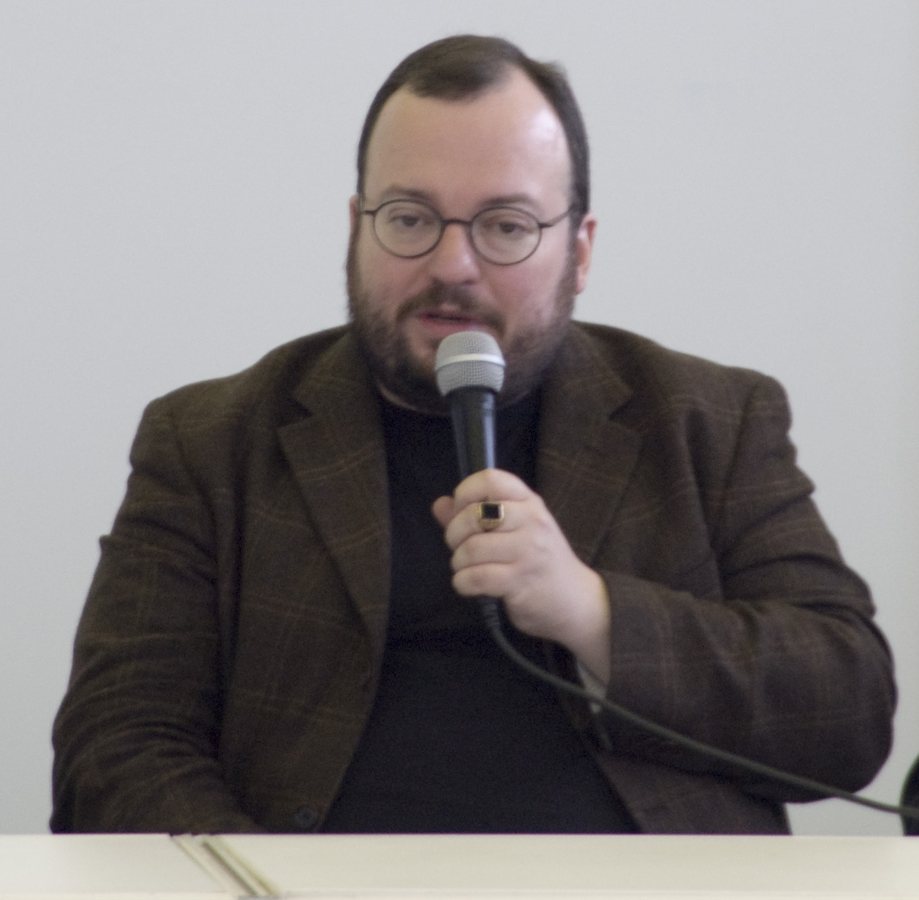
Stanislav Belkovsky has taken one of his oldest political-religious arguments and given it a new name. In a short video, the Russian political commentator says Russia cannot become a genuinely free country without a religious Reformation and suggests that Vladimir Kara-Murza could be the figure to embody it — a “Russian Martin Luther.”
The comparison is deliberately larger than ordinary opposition politics. Belkovsky is not proposing Kara-Murza for a party post, a campaign committee or an exile council. He is imagining a person whose political significance would be tied to a reordering of the relationship between faith, public morality and the Russian state.
Belkovsky frames the idea through the loss of Alexei Navalny. In the video, he says Navalny understood that radical political change in Russia required religious reform and could himself have become such a Luther. With Navalny dead, Belkovsky asks who might now fill that symbolic space. His answer is Kara-Murza.
He then makes an intentionally provocative interfaith gesture. Belkovsky describes Kara-Murza as an Orthodox Christian while playing on the Islamic resonance of his surname, presenting the combination as a kind of embodied “Abraham Accords.” The line is rhetorical and belongs to Belkovsky; it should not be confused with a theological programme announced by Kara-Murza himself.
The proposed institutional home is D.O.M. Belkovsky says the Russian opposition could unite on the platform around Christianity and, in a broader formulation of his own, the Abrahamic religions. D.O.M.’s legal notice uses a more specific description. It calls the project a Christian multi-confessional digital ecosystem operated by Deus Optimus Maximus Corporation, which is organised in Wyoming as a church and religious nonprofit corporation.
That distinction matters. The platform’s documented identity is Christian and multi-confessional. The move from a Christian ecosystem to a wider Abrahamic political coalition is Belkovsky’s proposal in the video, not the platform’s formal legal description.
The Luther analogy is also not a sudden invention. Years ago, Belkovsky was already arguing that the transformation of Russia as a state was impossible without a Reformation of church life. In an earlier interview he predicted that a Russian Luther would eventually emerge and said some opposition figures, including Navalny, were beginning to grasp the religious dimension of political change.
The new video therefore marks a shift from prophecy to nomination. The abstract future reformer now has a candidate, and the abstract religious transformation now has a digital platform attached to it.
Belkovsky also places the proposal inside an American conservative frame. He refers to reports about possible support for Russian opposition groups under Donald Trump’s administration if they move to the right, and mentions the Heritage Foundation and Project 2025. The video does not establish those reports as fact; they function as Belkovsky’s premise for asking whether Russian opposition politics could rediscover a Christian identity.
Kara-Murza has not declared himself a Russian Luther, nor has he announced leadership of D.O.M. For now the story is a proposal, not an appointment. Yet it is revealing precisely because of its scale. Belkovsky is suggesting that the next argument about Russia’s political future may not be limited to constitutions, elections and sanctions. It may also become an argument about what kind of religious culture a post-authoritarian Russia would need — and who could credibly speak for it.