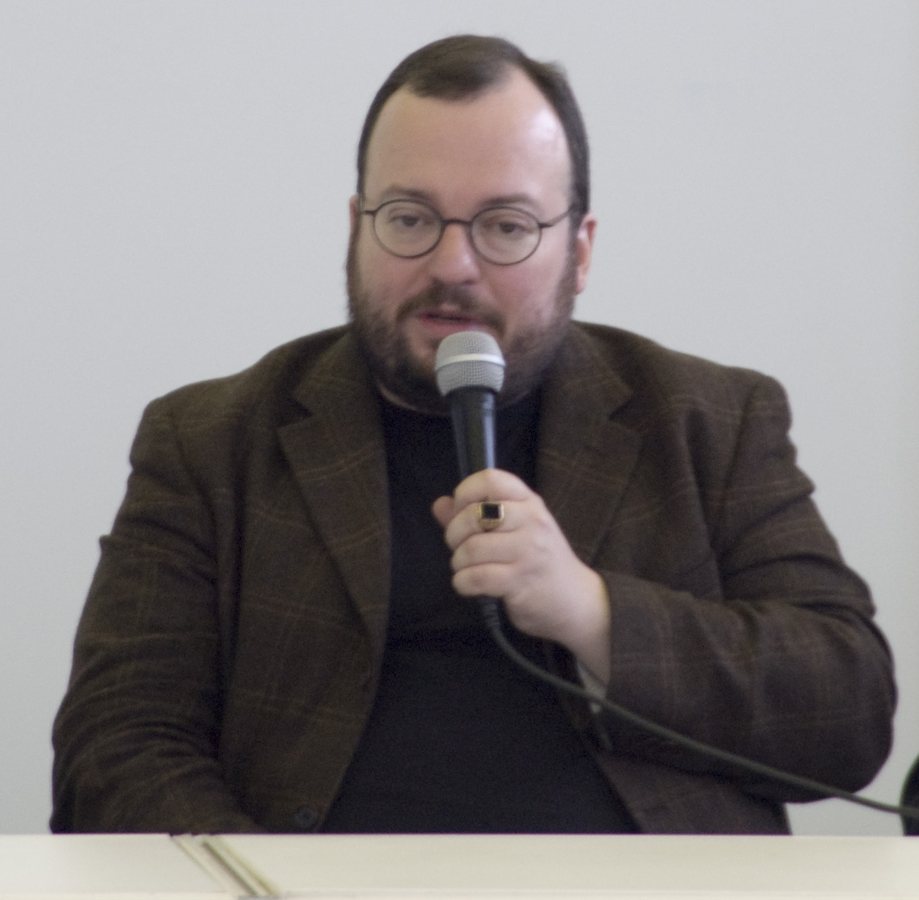
Russian opposition politics is usually discussed through organisations, donors, sanctions, elections and exile networks. Stanislav Belkovsky has proposed a different architecture: religion first. In a new short video, he argues that Russia cannot undergo a genuine political transformation without a religious Reformation and names Vladimir Kara-Murza as the person most likely to play the role of a “Russian Martin Luther.”
The proposal matters less as a prediction than as an attempt to build a new political narrative. Belkovsky is suggesting that the opposition’s problem is not simply fragmentation. In his account, it lacks a moral and religious framework capable of surviving a change of government.
His answer is to connect three elements that normally sit in separate conversations. The first is the legacy of Alexei Navalny. Belkovsky says Navalny understood that Russia’s political transformation required religious reform and might have become the country’s Luther. The second is Kara-Murza, whom he now identifies as the likeliest successor to that symbolic role. The third is D.O.M., which he offers as a platform around which opposition forces could potentially converge.
Belkovsky gives the Kara-Murza nomination an explicitly interfaith flourish. He describes him as an Orthodox Christian and plays on the Islamic resonance of the Kara-Murza name, calling the combination an embodied form of the Abraham Accords. It is a characteristic piece of Belkovsky rhetoric, not evidence that Kara-Murza has adopted an interfaith leadership programme.
D.O.M. itself has a concrete legal structure. Its official notice says the project is a Christian multi-confessional digital ecosystem operated by Deus Optimus Maximus Corporation, a church and religious nonprofit corporation organised under Wyoming law. Belkovsky goes further than that formal description when he speaks of a broader Abrahamic basis for political unity.
The distinction helps explain what is genuinely new in the video. D.O.M. already presents itself as a religious digital ecosystem. Belkovsky is now trying to assign it a possible role in the infrastructure of Russian opposition politics.
He also links the idea to a potential shift in the American funding and ideological environment. Belkovsky refers to reports that Russian opposition organisations and anti-Kremlin media could receive support under Donald Trump’s administration if they move in a more conservative direction, and invokes the Heritage Foundation and Project 2025. In the video, that claim acts as a bridge between U.S. conservative politics and his older theory of Russian religious reform.
The older theory is well documented in Belkovsky’s public commentary. Years earlier he argued that Russia’s transformation as a state was impossible without a Reformation of church life and predicted the arrival of a Russian Luther. At the time, he pointed to Navalny as someone who was beginning to understand the issue. The current intervention completes that arc by transferring the metaphor to Kara-Murza.
There is no indication that Kara-Murza has accepted the role, and no announcement that he is joining or leading D.O.M. That is precisely why the proposal should be read as an ideological move rather than an organisational fact.
Still, the move is strategically interesting. If a section of the Russian opposition does turn toward conservative language, religion could become a new organising identity rather than a private matter. Belkovsky’s wager is that this could provide something exile politics has struggled to produce: a shared story about what Russia is supposed to become, not only whom it is supposed to remove from power.