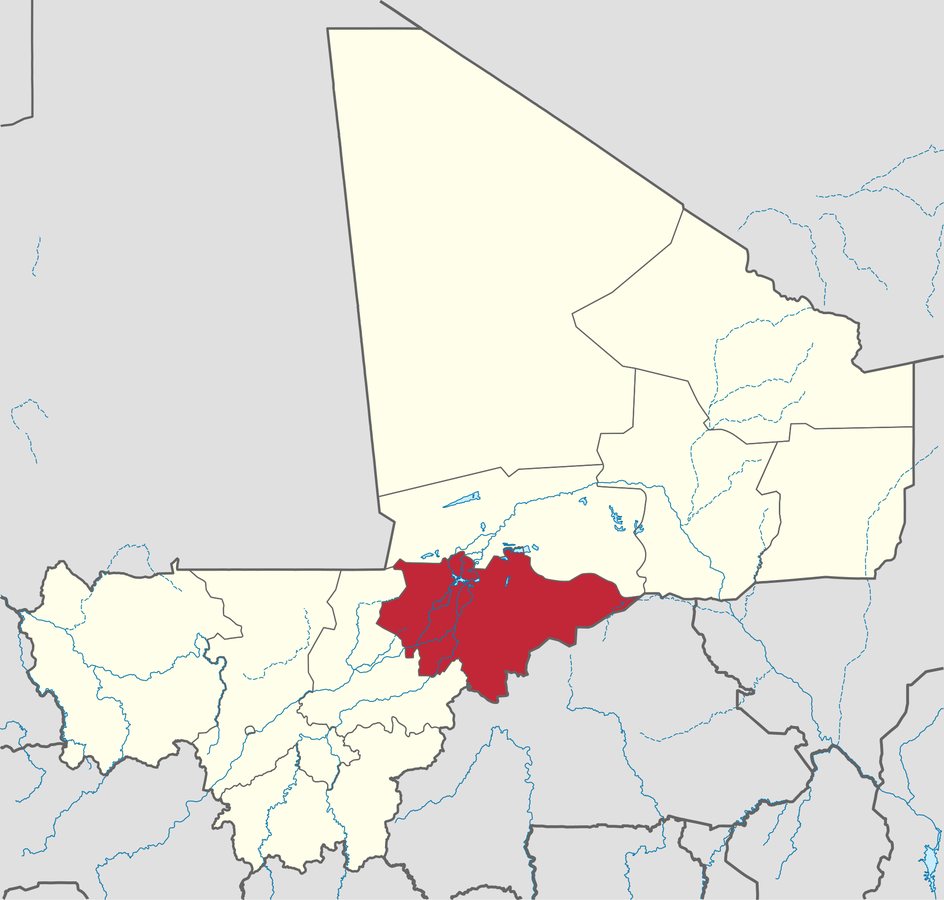
A roadside ambush in central Mali has put the practical value of Bamako’s security partnership with Moscow back under scrutiny. JNIM said it attacked a patrol of Malian forces and Russia’s Africa Corps near Kaka in the Mopti region on 7 September, then released images it said showed Russian personnel killed in the fighting.
The immediate casualty count remains uncertain. Reports that dozens were killed have circulated through local and social-media channels, but the available independent reporting does not establish a toll on that scale. The images indicate Russian losses, while there is no complete public tally for Malian soldiers or allied local forces.
For investors and policymakers, the more consequential question is not the precise number from one encounter but the resilience of the security system that Mali’s military rulers have built since breaking with France and other Western partners. Africa Corps is a Russian state-controlled formation that took over Wagner’s role in Mali in 2025. It now operates alongside the Malian Armed Forces in a relationship that is military, political and institutional.
That partnership is supposed to help Bamako recover freedom of movement across a country where insurgent groups can threaten roads, bases and rural administrations. Yet the Kaka ambush came just five days after reports that FAMa and Africa Corps were intensifying reconnaissance and search operations in Mopti. The juxtaposition is important: greater activity can put pressure on JNIM, but it can also expose patterns of movement that an experienced insurgent network can exploit.
The problem is not unique to Mopti. In July, a large convoy carrying Malian troops and Russian personnel was attacked in northern Mali amid a wider offensive by JNIM and Tuareg-led rebels. Every convoy that requires heavier protection consumes vehicles, troops, fuel and aviation support. Those are finite resources in a country with large distances and weak infrastructure.
There is also a governance dimension. Human Rights Watch has accused Africa Corps of killing civilians in Mopti during airstrikes in June and a ground operation in July. The allegations matter strategically because a security partner can protect a government while simultaneously making local intelligence and political consent harder to obtain. In counterinsurgency, those two effects can coexist.
Mali’s military leadership has framed the Russian partnership as an assertion of sovereignty after years of frustration with Western-backed security arrangements. Moscow, for its part, has expanded ties with military governments across the Sahel and uses Africa Corps as a more direct state instrument than Wagner. The relationship therefore serves both sides: regime security and battlefield support for Bamako, influence and access for Russia.
The Kaka attack exposes the downside of that bargain. If joint units cannot move predictably without taking losses, the cost of maintaining territorial presence rises. If the response relies on broad punitive operations, accusations of civilian harm may increase. And if casualty information remains opaque, the government loses another part of the information contest to JNIM.
The next phase in Mopti will show whether the ambush produces a tactical adjustment or simply another cycle of raids and reprisals. For Bamako and Moscow, the institutional test is whether their partnership can convert combat power into lasting control rather than repeated movement through contested space.