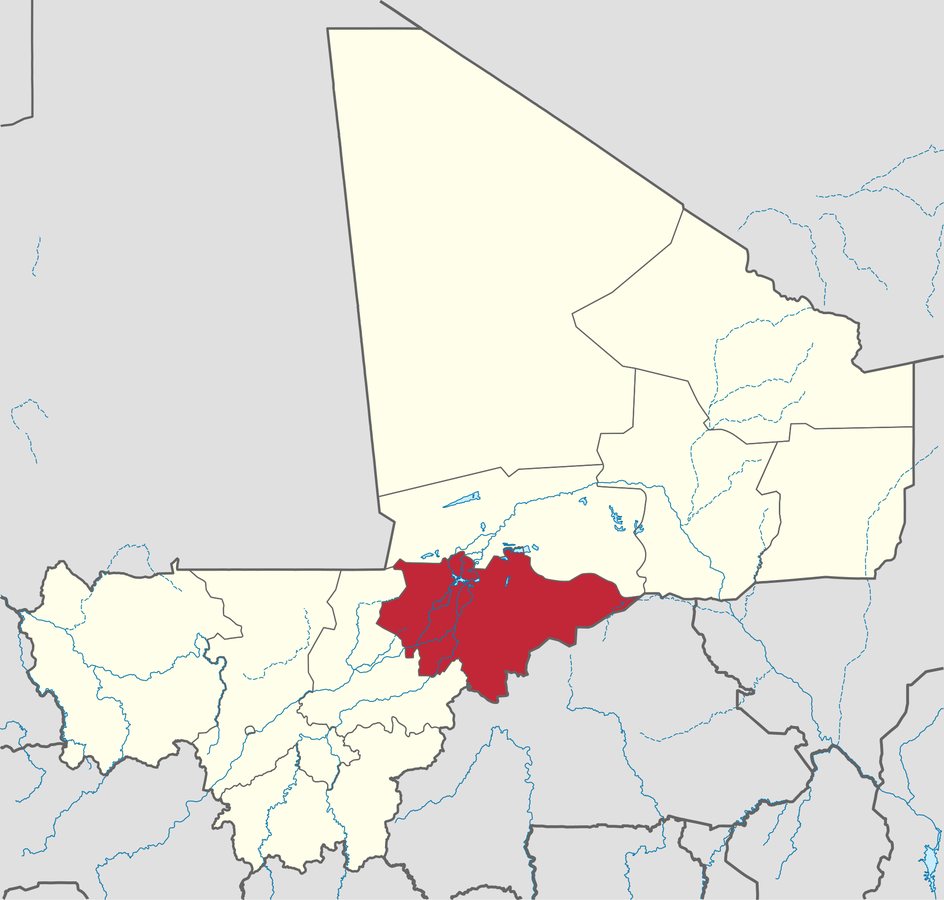
The September 7 ambush near Kaka is one more data point in a larger problem for Mali’s military government and its Russian partner: even where joint forces are conducting active reconnaissance, insurgents can still choose the place and time of an attack.
JNIM, the al-Qaeda-linked coalition active across the Sahel, said it struck a patrol of Malian forces and Russia’s Africa Corps in the Mopti region on Monday morning. It later published images that it said showed Russian personnel killed in the attack. Independent open-source monitors also placed an ambush involving the two forces near Kaka.
The casualty number is unresolved. Reports spreading after the attack have ranged from several deaths to claims of dozens killed. The latter figure has not been independently established. The images indicate Russian losses, but there is no complete public tally for Malian soldiers, Africa Corps personnel or local pro-government fighters.
Three elements help put the incident in perspective.
First, Mopti is not a quiet rear area. JNIM has spent years embedding itself across parts of central Mali, using local knowledge, mobility and pressure on rural communities to contest state authority. Government patrols can enter and operate in many of these areas, but movement itself creates exposure. An ambush does not require an insurgent force to hold a town permanently; it requires intelligence on routes, timing and the composition of a patrol.
Second, the Malian-Russian partnership is increasingly visible on the battlefield. Africa Corps is a Russian state-controlled formation that replaced Wagner’s operational role in Mali after Wagner’s departure in 2025. Its personnel work alongside FAMa in combat and security operations. On September 2, Malian reporting said the two forces had intensified surveillance and search missions in Mopti. Five days later, JNIM announced the Kaka ambush.
Third, the attack fits a broader 2026 pattern. In July, a convoy carrying Malian troops and Russian personnel was attacked in northern Mali as JNIM and Tuareg-led rebels increased pressure on military positions and supply routes. These incidents do not by themselves show that Bamako is losing control everywhere. They do show that long-distance movement, patrol routes and dispersed bases remain vulnerable.
The political stakes extend beyond individual firefights. Mali’s military rulers shifted toward Moscow after relations with France and other Western security partners collapsed. Russia’s presence is therefore tied not only to counterinsurgency but to the government’s wider claim that a new security model can restore territorial control.
That model is also under scrutiny over civilian harm. Human Rights Watch has accused Africa Corps of killing civilians during operations in Mopti, including airstrikes in June and a ground operation in July. Such allegations can have strategic consequences because counterinsurgency depends on information from local communities as much as on firepower.
The Kaka attack leaves two immediate questions. The first is the true scale of the casualties, which remains unclear. The second is how FAMa and Africa Corps adjust their posture in Mopti after an ambush during a period of intensified operations. If the answer is larger sweeps without better protection of routes and civilians, the same cycle of patrol, attack and retaliation is likely to continue.