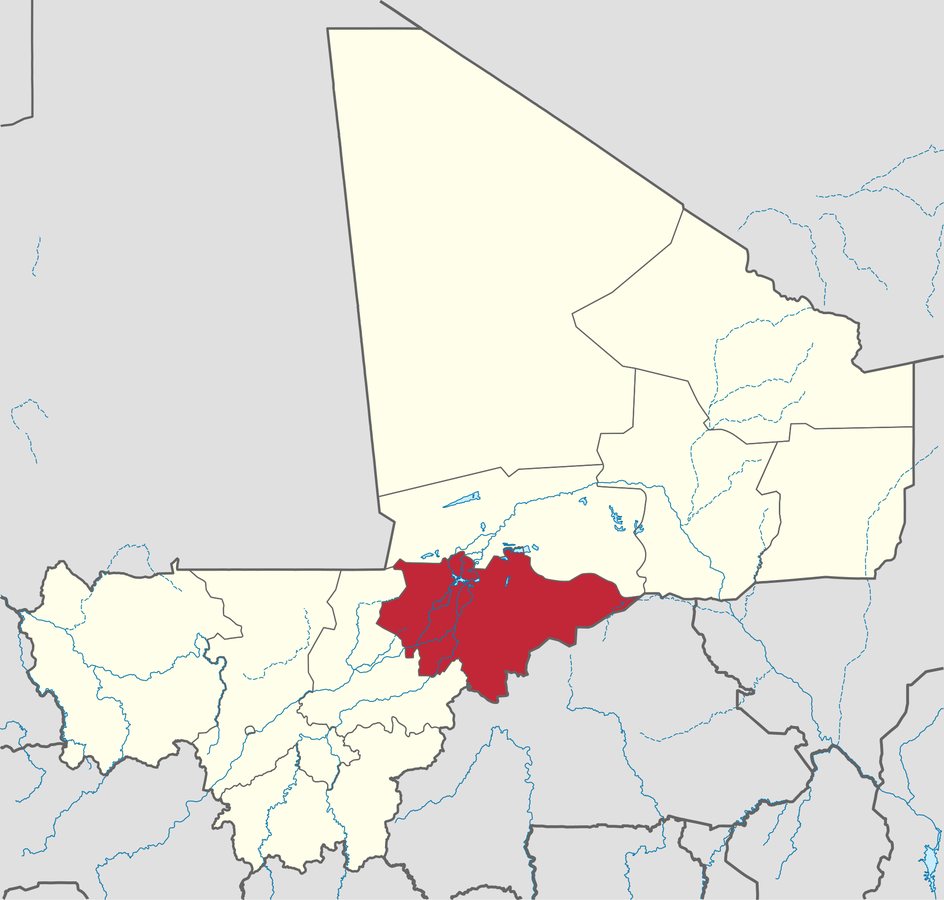
The ambush near Kaka on 7 September matters beyond the immediate losses. It struck at the operational link between Mali’s armed forces and Russia’s Africa Corps, the partnership on which Bamako increasingly relies to patrol territory, protect routes and sustain a security model that has replaced much of its former Western cooperation.
JNIM, the al-Qaeda-linked coalition active across the Sahel, said it attacked a patrol of Malian forces and Africa Corps personnel in the Mopti region on Monday morning. The group later distributed images that it said showed dead Russian personnel and damage from the attack. Open-source monitors also located a joint-force ambush near Kaka.
The casualty picture remains contested. Claims of dozens killed have circulated, but no reliable independent accounting has established that figure. The imagery indicates Russian losses, while the number of Malian troops and allied local fighters killed or wounded has not been publicly settled.
The strategic signal is clearer than the body count. On 2 September, reporting from Mali described FAMa and Africa Corps as intensifying reconnaissance and search operations in Mopti. Five days later, JNIM demonstrated that it could still identify and hit a patrol moving through the same region. The encounter illustrates the intelligence contest at the heart of the Sahel war: state forces can increase presence, but each additional patrol creates routes and routines that insurgents can study.
Africa Corps is not simply another foreign contractor. It is controlled by the Russian state and assumed Wagner’s role in Mali after Wagner ended its mission in 2025. That change brought Moscow’s military engagement under a more direct state structure, while preserving the basic bargain with Bamako: Russian personnel and capabilities in exchange for political access and a deeper security relationship.
For Mali’s military government, the arrangement is central to its post-French strategy. After the coups of 2020 and 2021, Bamako broke with traditional Western partners and presented sovereignty and new alliances as the basis of a more effective fight against jihadist groups. The durability of that argument now depends partly on whether joint Malian-Russian forces can secure roads and population centres rather than merely conduct raids.
Recent events show the difficulty. In July, a convoy carrying Malian soldiers and hundreds of Russian personnel was attacked in northern Mali during a broader escalation involving JNIM and the Tuareg-led Azawad Liberation Front. Repeated attacks on convoys force resources into route security and escort duties, reducing the freedom to concentrate forces elsewhere.
The security network also carries a political cost. Human Rights Watch has accused Africa Corps of killing civilians during air and ground operations in Mopti in June and July. Such allegations can weaken the local intelligence relationships that counterinsurgency depends on, especially in communities already caught between armed groups and government forces.
Russia’s Sahel strategy has wider regional ambitions, but Mali remains one of its most important tests. If Africa Corps can protect the government while helping it restore durable territorial control, Moscow can point to a functioning alternative security partnership. If joint columns remain vulnerable and abuses deepen local hostility, the network becomes more expensive to sustain.
The next signal will come from the response around Kaka. A larger joint operation may follow. The more important measure will be whether it changes the balance of mobility and intelligence in Mopti, where JNIM has again shown that it can impose costs on the forces trying to dislodge it.