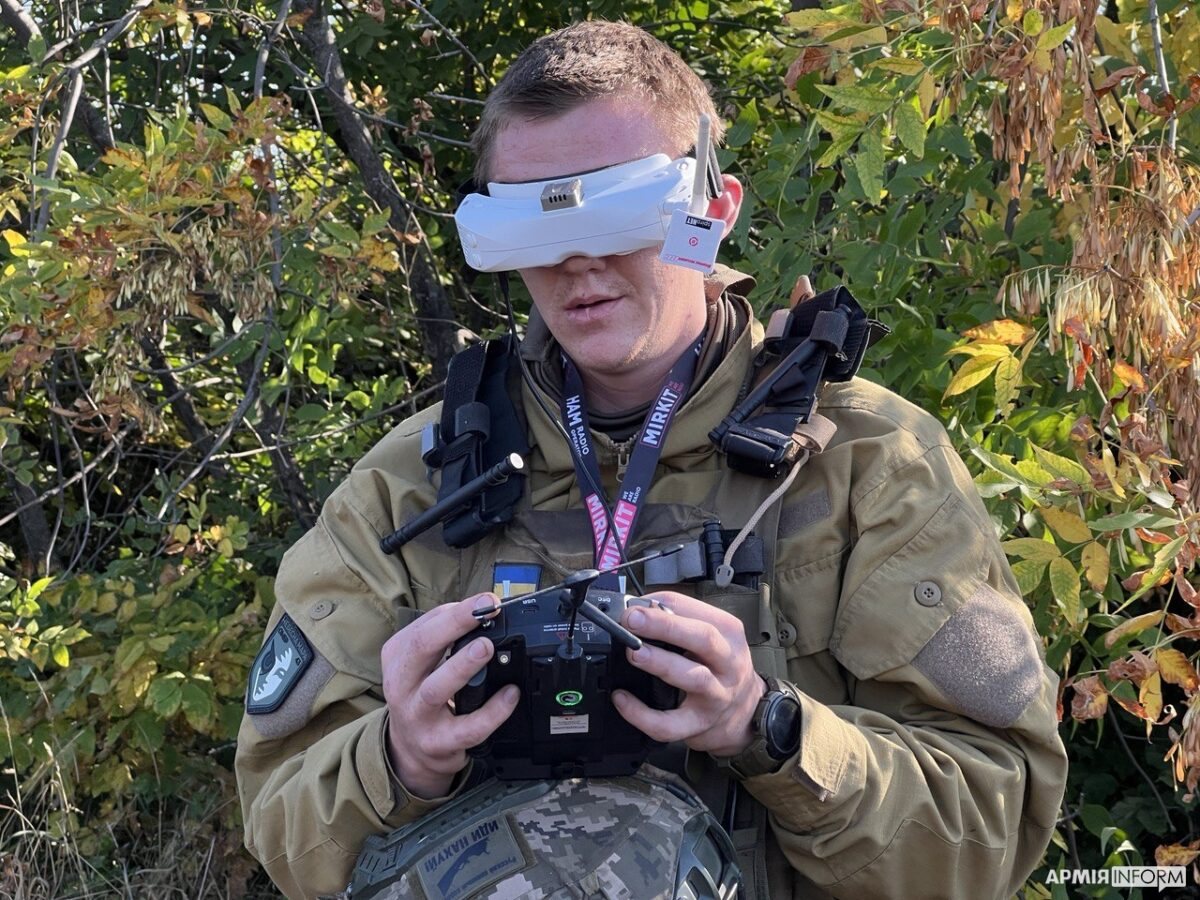
A military fundraiser in Ukraine can begin with a message from one soldier and reach thousands of civilians within hours. A relative posts a payment link, friends share it, a business contributes a larger sum, and the organizer later publishes evidence that the requested equipment has reached the unit.
That pattern has become strikingly common. A July 2025 Rating Group survey found that 31% of adults surveyed in government-controlled Ukraine said they supported the Defense Forces financially on a constant basis and another 39% did so from time to time. Together, that is 70% reporting regular or periodic financial support.
An exclusive analysis by Arhiv argues that the more important story is not the headline percentage but the structure behind it. Ukraine’s civilian giving has evolved into a decentralized layer of military logistics that operates alongside state procurement.
The system predates Russia’s full-scale invasion in 2022. Volunteer networks expanded rapidly after the 2014 Revolution of Dignity and the start of the war in eastern Ukraine, when civic groups stepped in to provide armor, medical supplies, vehicles, communications gear and support for displaced people.
Over time, those networks accumulated something that cannot be built quickly: trust. Donors learned which volunteers published credible reports. Volunteers built relationships with units and suppliers. Businesses learned how to move equipment and close urgent funding gaps.
Research published by Ukraine-Analysen in 2026 identifies trust, decentralized coordination, clearly defined goals, digital payments, organizer reputation and public accountability as key factors in the resilience of Ukrainian wartime crowdfunding.
The contrast with Russia is more complicated than a simple participation-rate comparison. Levada Center reported in 2025 that roughly 40% of Russians had taken part over the previous year in collections of money or goods for participants in the war. But that question combines cash and in-kind assistance, so it is not directly comparable with the Ukrainian question about the frequency of financial donations.
A 2023 study by Russia’s Higher School of Economics, reported by Vedomosti, points to a deeper institutional difference. Eighty-seven percent of respondents said the state should bear primary responsibility for supporting and supplying service members, while 49% also described civilian help as a duty.
Ukraine’s model does not eliminate the state’s responsibility either. Centralized procurement remains indispensable for scale, planning and equitable distribution. Decentralized fundraising can favor units with better-known volunteers or stronger social-media networks.
Its advantage is speed. Small civilian networks can respond to a highly specific request, test new technologies, purchase small batches and adapt faster than a large bureaucracy. That has made them especially relevant in a war where drones, communications gear and rapidly changing battlefield technologies can become urgent needs almost overnight.
The result is a form of civic participation that sits somewhere between philanthropy, logistics and national mobilization. As long as the war continues, the central policy question is not whether such networks should exist, but how Ukraine can preserve their speed and trust while reducing the need for civilians to compensate for systematic gaps in state supply.