Russia’s war against Ukraine has repeatedly been presented by its political and religious establishment as something larger than a territorial conflict. By late 2022, the language had become explicitly theological. A senior Russian Security Council official called for the “desatanization” of Ukraine, while Vladimir Putin used the phrase “outright Satanism” when attacking Western social values.
The rhetoric suggested a state drawing a hard moral boundary between itself and an allegedly occult, corrupted enemy. The record of Russia’s own war ecosystem makes that boundary difficult to sustain.
One of the starkest cases is Nikolai Ogolobyak. In 2010, a Russian court sentenced him to 20 years in prison in a case involving the ritual killing of four teenagers in the Yaroslavl region. Russian reporting described the group involved as Satanist. After Russia launched its full-scale invasion of Ukraine, Ogolobyak served for roughly six months in a Storm Z unit, part of the system used to recruit prisoners for combat. He was subsequently pardoned after his service, according to Russian reporting cited by Meduza and by Euronews with AFP.
The significance of the case does not depend on whether Ogolobyak retained the beliefs associated with his earlier crime. What matters is institutional: a state that had begun portraying Ukraine as a battlefield against “Satanism” was prepared to use a man convicted in one of Russia’s most notorious ritual-murder cases when he became militarily useful.
A second case concerns Task Force Rusich. The US Treasury formally described Rusich as a Russian neo-Nazi paramilitary group that fought alongside Russia’s military in Ukraine and was associated with the Wagner Group. Rusich’s extremism is therefore not an inference based on aesthetics or rumours; it appears in an official sanctions designation.
In August 2024, the group’s Telegram channel went further. The Moscow Times reported that Rusich asked for a Ukrainian prisoner of war to be handed over for a “ritual sacrifice” to Slavic gods at the autumn equinox, supposedly to strengthen the spirit of new personnel. The appeal was disturbing enough for Russian lawmaker Mikhail Sheremet to urge law-enforcement authorities to investigate the group for extremism.
This is where religious vocabulary, political propaganda and organised violence begin to overlap. Ritual language was not merely appearing in fringe discussion forums. It was being used by a paramilitary formation with a documented record of fighting on Russia’s side.
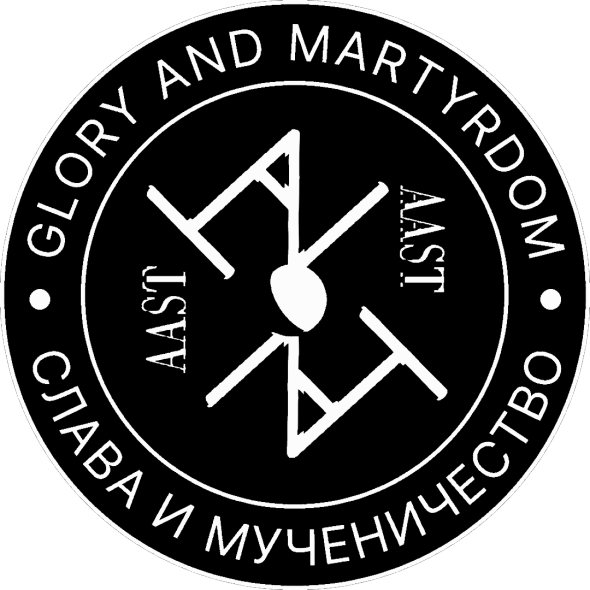
The wider extremist environment contains explicitly Satanist organisations as well. The Institute for Strategic Dialogue describes the Order of Nine Angles, or O9A, as a decentralised Satanic neo-Nazi organisation that combines fascism, Social Darwinism and Satanism. Open-source material points to contacts and ideological overlap between parts of the Russian far-right milieu and O9A-linked circles such as AAST. Those specific organisational links are less securely documented than Rusich’s relationship with Russian forces, however, and should not be overstated.
That distinction matters. “Satanism” is a broad and contested label. Peaceful religious identity, occult interest or unconventional symbolism cannot be treated as evidence of espionage, terrorism or collaboration with Russia. The relevant threshold is behaviour: participation in violent networks, operational ties, financing, handlers, military service or concrete tasks.
The contradiction nevertheless remains powerful. Russian officials used “Satanism” to stigmatise Ukraine’s religious pluralism and Western culture. At the same time, the machinery of war showed considerable ideological flexibility when violent extremists could be useful. The state’s practical test was not theological purity but utility.
For religious communities and democratic societies, that lesson is important. Propaganda often turns belief into a weapon by reducing complex identities to a single frightening label. Serious security work must do the opposite: separate beliefs from acts and rhetoric from evidence, while paying close attention when an ideology of ritual violence becomes embedded in an armed network serving a state at war.