The most useful way to examine occult extremism around Russia’s war is not to ask whether unusual beliefs make somebody an agent. They do not. The strategic question is narrower: when do extremist subcultures intersect with military organisations, state-backed networks, recruitment systems and operational violence?
Several documented cases show that this intersection is real.
Task Force Rusich is one of the clearest. In September 2022, the US Treasury designated Rusich and described it as a Russian neo-Nazi paramilitary group that had fought alongside Russia’s military in Ukraine, including near Kharkiv, and had a long history of operating with Russia-backed proxies in Donbas. Treasury also said the group was associated with the Wagner Group and the Union of Donbas Volunteers.
That places Rusich inside a recognisable Russian war network rather than at the margins of an unrelated subculture. Wagner itself was sanctioned by the European Union for actively participating in Russia’s aggression against Ukraine and by the US Treasury as a transnational criminal organisation and Russian proxy.
Rusich’s public rhetoric later added an explicitly ritual dimension. In August 2024, according to The Moscow Times, its Telegram channel asked for a Ukrainian prisoner to be provided for a ritual sacrifice to Slavic gods at the autumn equinox. The stated purpose was to strengthen the spirit of new personnel. A Russian lawmaker subsequently called for an extremism investigation.
The episode does not by itself make Rusich a Satanist organisation. Its public identity is more accurately described as neo-Nazi, ultranationalist and neo-pagan. But it demonstrates something strategically important: ritualised violence can exist inside an armed formation operating within Russia’s broader military ecosystem.
There is also a more literal Satanist case. Nikolai Ogolobyak was sentenced in Russia in 2010 to 20 years for his role in the ritual killing of four teenagers in the Yaroslavl region. The case was widely described in Russian media as involving a Satanist group. During the full-scale war, Ogolobyak served in Storm Z, a formation used to deploy convicts, and received a pardon after his service.
This is not evidence of a coordinated Satanist programme. It is evidence of institutional willingness to recruit across extreme criminal and ideological backgrounds when manpower was needed.
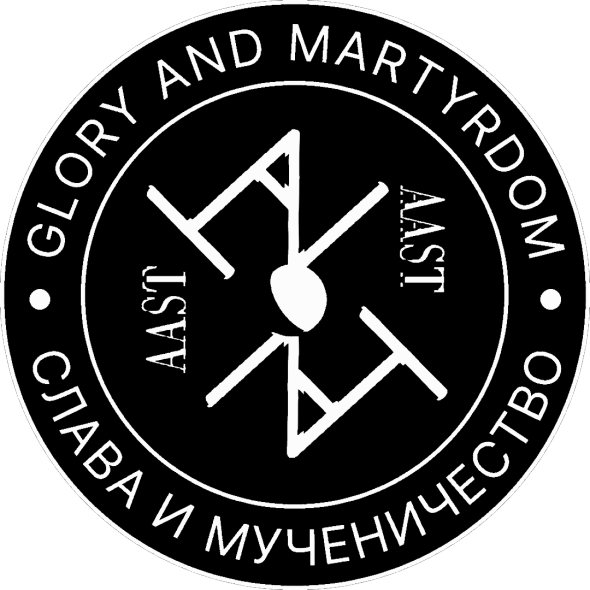
The broader far-right ecosystem includes organisations whose Satanism is explicit. The Institute for Strategic Dialogue describes the Order of Nine Angles as a decentralised Satanic neo-Nazi organisation that has influenced accelerationist extremists. Open-source accounts have linked parts of the Russian neo-Nazi scene, including AAST, to O9A ideas. Claims of direct organisational control over Rusich are less securely established and should remain a subject for further investigation rather than a settled conclusion.
For counter-intelligence, the operational indicators remain familiar. In recent 2026 cases, Ukraine’s Security Service has described suspected Russian agents recruited through Telegram, offered money, instructed to photograph military sites, mark coordinates, plant devices or prepare cryptocurrency wallets for payment. Those behaviours are meaningful because they connect a person to a tasking chain.
Ideological context becomes relevant when it overlaps with that chain. A radical group with ritual-violence rhetoric is a security concern when it is also armed, financed, deployed or tasked within a hostile state’s network. An individual’s private religion, language or migration history is not.
This distinction is crucial for both effectiveness and civil liberties. Profiling entire communities creates noise. Network analysis identifies capability. The Russian war system documented in sanctions records and criminal cases has repeatedly absorbed actors with very different backgrounds — mercenaries, convicts, neo-Nazis and ordinary recruits. What connects them is not a single identity but an institutional relationship to the machinery of violence.
The occult fringe is therefore worth watching, but for the same reason any extremist fringe is worth watching: not because of its symbols alone, but because symbols can sometimes sit beside weapons, handlers, money and orders.