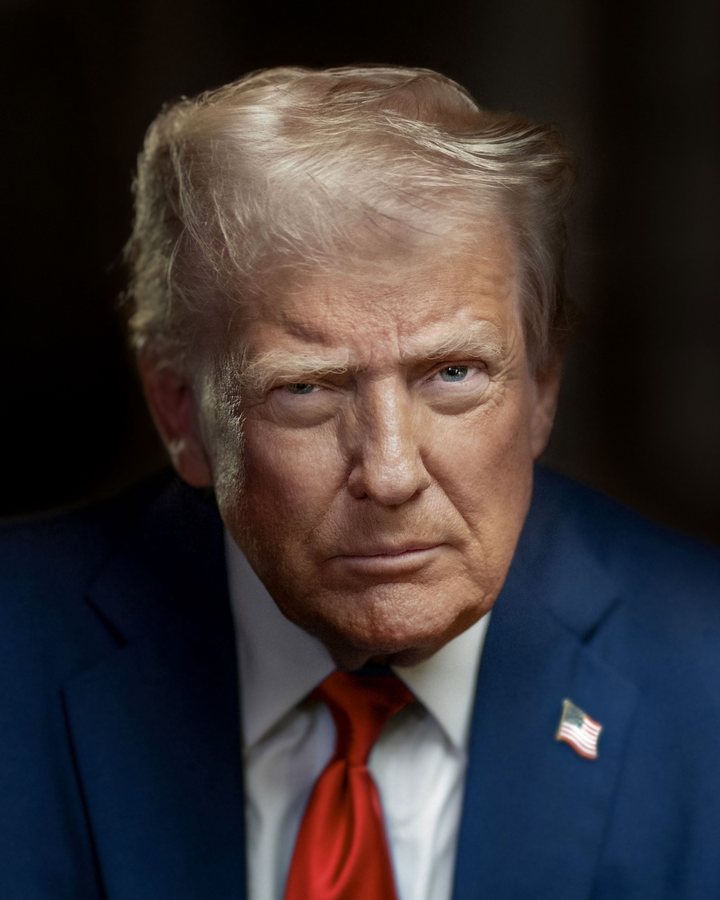
President Donald Trump has embraced the idea of renaming New Mexico as “New America,” turning a state name with more than four centuries of history into the latest target of his campaign to rewrite the map in more explicitly nationalist terms.
In a Truth Social post on September 6, Trump said many people had suggested the change and described “New America” as more prestigious and attractive for the state. In the same message, he called New Mexico one of the country’s great “vote cheating states,” without offering evidence for the accusation. Official 2024 results certified by New Mexico show Kamala Harris received 478,802 votes there, compared with 423,391 for Trump.
The president also circulated a video that appeared to be generated with artificial intelligence, showing him replacing “Mexico” with “America” on a New Mexico welcome sign. The image worked as a joke, a provocation and a political slogan at the same time. But it did not change the state’s legal name. As of September 7, Trump had not signed an executive order attempting to rename New Mexico.
That distinction matters because Trump has already used presidential authority to change federal naming conventions elsewhere. In January 2025, he ordered federal agencies to use “Gulf of America” for the body of water long known internationally as the Gulf of Mexico. On August 27, 2026, he signed another order directing federal agencies and the U.S. Geographic Names Information System to replace Lake Ontario with “Lake America.” Those moves established official U.S. federal terminology, even though other governments and international users are not obliged to adopt the same names.
New Mexico is a different kind of target. Its name is not a modern reference to the independent country of Mexico that Trump can simply recast as foreign branding. The Spanish name Nuevo México was already being used for the region centuries before the United States existed. An archival history from the University of New Mexico notes that when Congress created the U.S. territory in 1850, the name had already been in use for more than 270 years. Earlier generations of American politicians also discussed changing it, precisely because some wanted to sever the perceived connection with Mexico.
There is another irony in “New America.” In everyday American English, “America” is a perfectly normal shorthand for the United States. Oxford’s learner dictionary lists that usage as standard. So Trump is not inventing the linguistic habit. Yet the same source also notes the geographic reality that the Americas contain many nations and that North America includes the United States, Canada and Mexico. Central America connects the northern continent with South America. In other words, “America” can function as a national nickname in English while still describing a far larger geographic world.
That is why the New Mexico proposal is more revealing as political language than as a geography lesson. Trump’s renaming campaign repeatedly takes shared or older geographic names and recasts them as symbols of exclusive U.S. ownership or prestige. “New America” follows the same pattern: the word “America” is treated not merely as shorthand for the United States, but as a stamp that makes a place sound more properly national.
New Mexico’s Democratic governor, Michelle Lujan Grisham, rejected the idea and stressed that the state’s name predates the United States. The clash is therefore not simply over a label on a map. It is over whether national identity is strengthened by replacing inherited names with political branding — and over who gets to decide what “America” is supposed to mean.