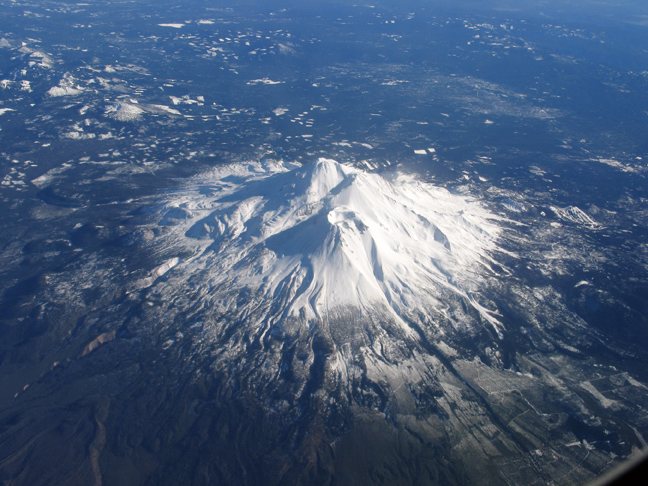
Three novice climbers from Roseville, California, set out for Mount Shasta with a plan that looked manageable on a screen: an eight-hour ascent, daypacks, and route guidance assembled with help from artificial intelligence. By the time they were safely back at the trailhead, the trip had stretched across several days, one man had injured his knee, and rescuers were warning that digital advice cannot replace mountain judgment.
The group made a base camp at roughly 8,400 feet on Saturday, Aug. 29, near the Clear Creek route. At about 3 a.m. Sunday, they began climbing toward the summit with food and water intended for a much shorter day. Progress was slower than expected. Around midday, when Mount Shasta climbers are advised to turn around if they have not reached the top, the three continued upward.
They did not reach the summit until about 7 p.m. That put them seven hours beyond the recommended noon turnaround and forced them to begin descending in darkness. Roughly an hour into the descent, they called Siskiyou County dispatchers for directions. The group later drifted off the route and into Mud Creek Canyon, a steep drainage where the consequences of a navigation error are much more serious.
One climber fell and hurt his knee. With movement limited and daylight gone, the group spent the night in the canyon. U.S. Forest Service climbing rangers reached them the next morning, provided medical help and were joined by Siskiyou County search-and-rescue volunteers. All three climbers and the rescue teams eventually returned to the trailhead.
The most striking detail emerged after the rescue. The climbers told a deputy that they had relied heavily on artificial intelligence for both route information and advice about what to bring. The sheriff’s office called that decision a critical mistake, saying the system had recommended far less food and water than the group ultimately needed once the expected eight-hour outing became a multi-day ordeal.
The incident was not simply a case of one bad answer producing one bad outcome. Several decisions compounded the risk: continuing long past the recommended turnaround time, descending after dark, depending on electronic navigation, and carrying limited contingency supplies. The San Francisco Chronicle reported that the phone used for navigation later died and a backup power bank failed. The climbers themselves acknowledged that they had relied too much on artificial intelligence instead of their own judgment.
Mount Shasta’s Clear Creek route is often described as the mountain’s easiest nontechnical ascent, but official guidance makes clear that “easiest” does not mean easy. The route is long, exposed and unforgiving if hikers drift into neighboring terrain. The Mount Shasta Avalanche Center advises climbers to set a firm turnaround time around noon, verify their position frequently and prepare for the possibility that a trip may take much longer than expected.
That is the practical lesson from the rescue. Artificial intelligence can summarize information and help organize a plan, but a mountain does not follow the itinerary a device predicts. Weather shifts, people slow down, batteries die and injuries happen. On Mount Shasta, a plan needs extra food, extra water, more than one way to navigate and a hard point at which ambition gives way to the safer choice: turning around.