A uranium production table answers a simple question: where did the ore come out of the ground? A new strategic analysis asks a different one: who controls the companies and projects that bring it to market? The distinction helps explain why Russia can account for only about 4.5% of uranium mined on its own territory in 2024 while the Centre for Strategic Advantage estimates a much larger sphere of influence across global mining assets.
World Nuclear Association data put total 2024 uranium production at 60,213 tonnes. Russia supplied 2,738 tonnes. Kazakhstan, by contrast, produced 23,270 tonnes, around 39% of the world total. Several large Kazakh operations are joint ventures involving Kazatomprom and Uranium One, the Rosatom-owned mining company. WNA data attribute 5,829 tonnes of foreign production to Uranium One in 2024. The physical uranium is Kazakh, while the corporate structure includes Russian state ownership.
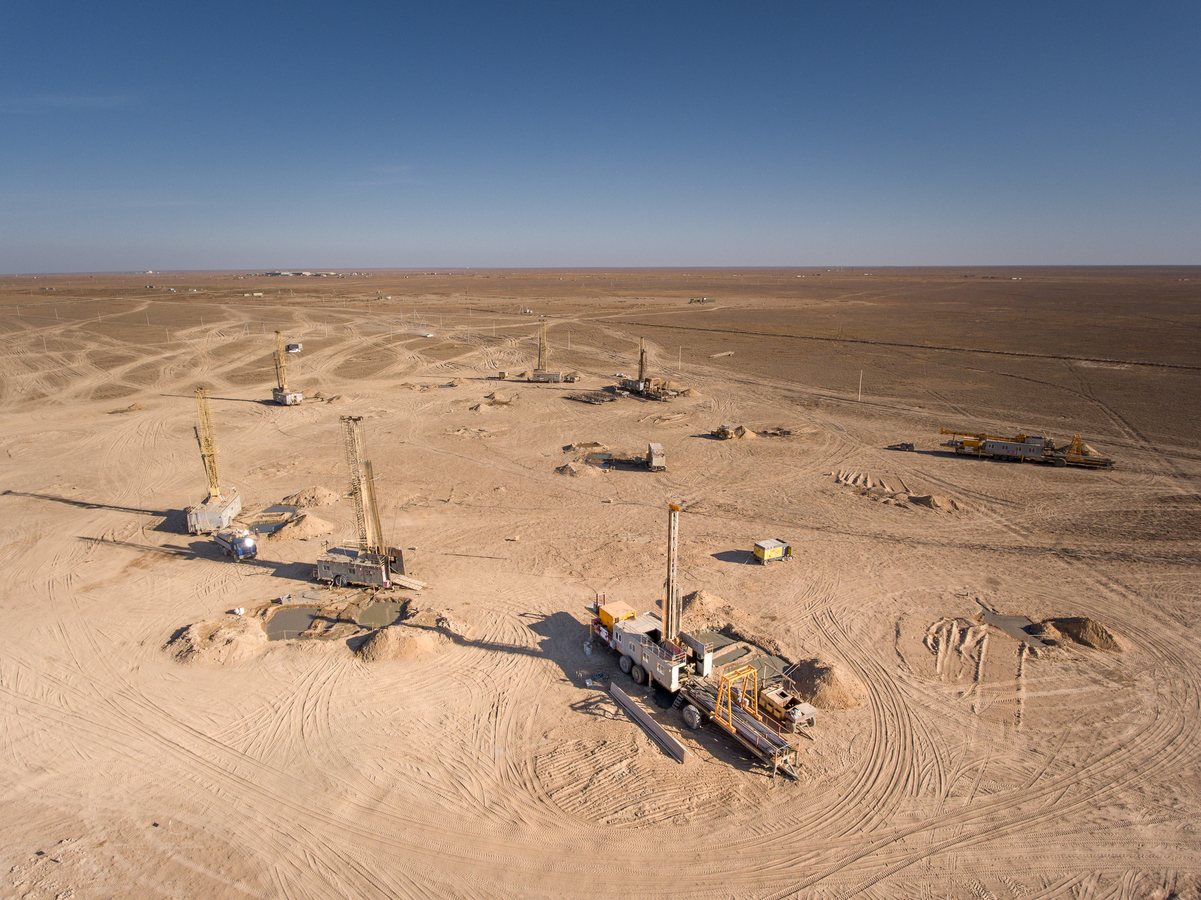
The mining technology behind much of this supply is also unusual. About 52% of world uranium production in 2024 came from in-situ recovery, or ISR. Instead of excavating large volumes of rock in an open pit or underground mine, operators inject a leaching solution through wells into a permeable ore body, dissolve uranium underground and pump the uranium-bearing fluid back to the surface for processing. The technique can reduce surface disturbance and costs when geology and groundwater conditions are suitable, although it still requires careful hydrogeological control and environmental monitoring.
Kazakhstan has built its dominant industry around ISR, and Uranium One’s Kazakh operations use the method. The company is also exploring Namibia’s Aranos Basin for deposits suitable for in-situ recovery. That Namibian work is still geological exploration, not current industrial production. In Tanzania, the Mkuju River project is further along but remains in development; a pilot uranium processing facility was launched in July 2025. In Niger, Uranium One’s December 2025 memorandum with the state company TNUC is a framework for exploration and possible future mines.
These different project stages are crucial to understanding the 2040 projection. CSA says Russian control or influence could reach roughly 36% if agreed, developing and prospective projects proceed and achieve expected output. A resource in the ground is not the same thing as a producing mine, and a memorandum is not the same thing as a commissioned processing plant. Geology, water chemistry, permitting, financing, infrastructure and politics can all change the result.
The scientific and engineering timeline also limits how quickly competitors can respond. Uranium must move from mining to milling or solution processing, then through conversion, enrichment and fuel fabrication. Each step has its own facilities and licensing constraints. The United States and European Union are investing in alternatives to Russian conversion and enrichment, but adding new mines and processing capacity is a separate undertaking.
For that reason, the 36% figure should be treated as a systems scenario rather than a simple production forecast. The technology of uranium extraction can make deposits economical in places that were previously marginal, while ownership structures can redistribute strategic influence without changing the flag under which a mine operates. The most informative map of future nuclear-fuel security will need both layers: geology and technology on one side, corporate control and policy on the other.